
Manifesto: Capital as Civilizational Architecture
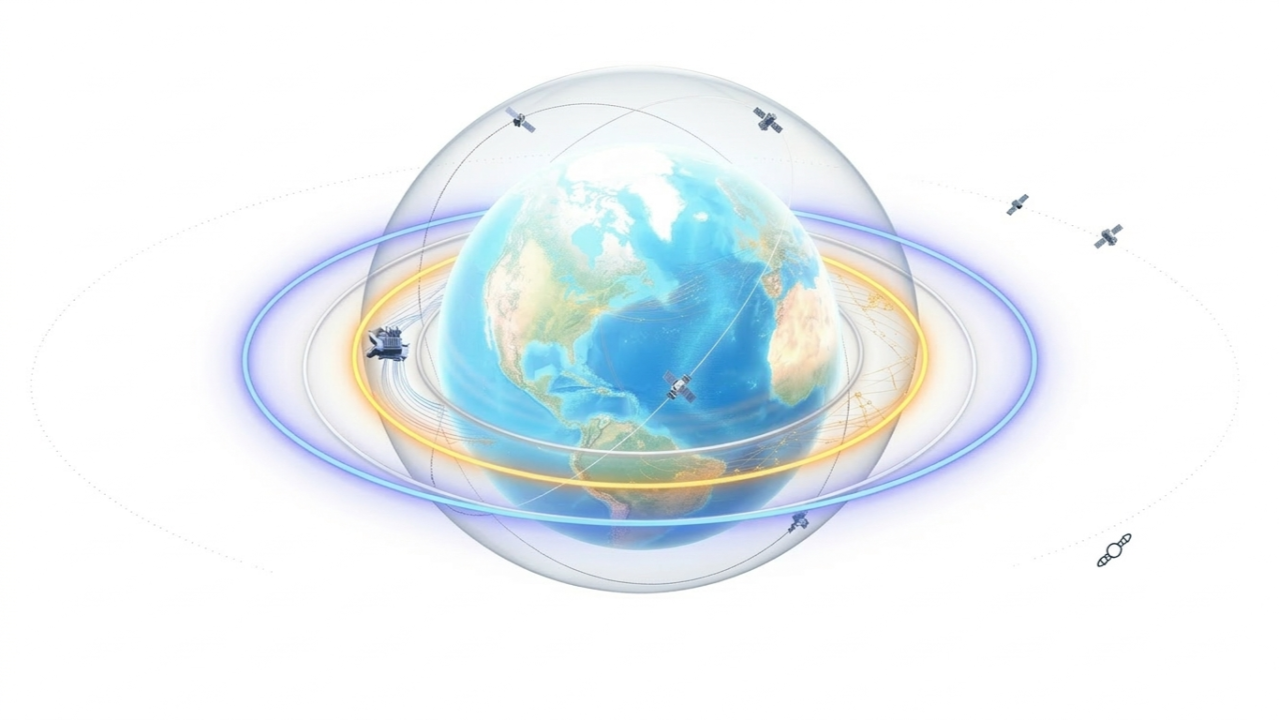
The App Economy dominated the past two decades. Value accrued to platforms controlling interfaces, distribution, and user attention.
“The next twenty years will be defined by HALO (Heavy Assets, Low Obsolescence) ownership. Sovereign power increasingly depends on energy, strategic compute, and orbital infrastructure—the real gravity well of Earth.”
Orbital Hegemony
Historical power relied on maritime control. Today, critical infrastructure is moving into orbit.
Military and economic systems depend on communications, PNT, and ISR, increasingly delivered via satellite constellations. Ukraine 2022: connectivity relied on Starlink (SpaceX). US–Iran 2026: exposed vulnerability of terrestrial assets; distributed satellite networks proved resilient.
Space infrastructure is now sovereign infrastructure, not discretionary R&D.
Asset Up-Streaming
Geopolitical fragmentation increases terrestrial risk: undersea cables, grids, and bases are vulnerable.
Asset Up-Streaming—relocating infrastructure to LEO constellations—provides Redundancy, Geographic independence and Protection against regional conflict.
Orbital infrastructure becomes a structural hedge against instability.
Energy Inflection
Energy is the true bottleneck of technological growth.
GEO solar intensity: 1,361 W/m², ~99% capacity factor.
SBSP market: $1.9B (2026, defense R&D) grows into $160B+ by 2040.
Cost barrier collapsing with Starship (<$100/kg).
Orbital solar could achieve LCOE parity with nuclear while deploying faster.
AI–Compute Nexus
AI is hitting a Terrestrial Compute Wall: land, water, and grid capacity limit scale. Orbit offers Space passive cooling, Continuous solar power and Physical isolation.
Sovereign AI may increasingly reside off-planet. Projected orbital data CAGR: ~60% through 2035.
Investment Implications
In 2026, the Middle East conflict escalated into a localized war. Its impact on the space economy is actually clearly positive in the medium to long term, but it causes short-term structural divergences.
The next phase will be dominated by HALO infrastructure operators, including
In-Orbit servicing
Satellite networks
Orbital energy
Strategic compute
Just like railroads or power grids: massive CAPEX, decades-long horizon, unassailable moats. Patient capital that long holds can own the very infrastructure the economy will ultimately rent.
Conclusion
Capital shapes civilizational order. Railroads, power grids, telecom networks restructured societies. As AI development accelerates and geopolitical competition normalizes limited conflicts, capital will increasingly concentrate in HALO assets.
The next layer is orbital. Control of energy, compute, and orbital infrastructure—the gravity well of Earth—defines the strategic and economic architecture of the next century.
By Norn/ Shunyi Yang. President & Co-founder of Narrow Gate Holding.
Read more:
https://www.linkedin.com/pulse/manifesto-capital-civilizational-architecture-norn-shunyi-yang-zwfkc
